


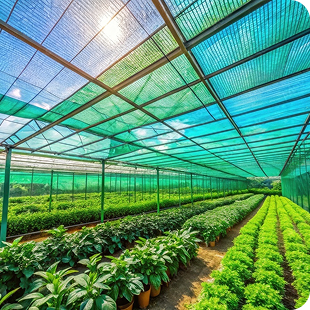
Green, White or Black Shade Net: What Does Colour Change?
Colour changes how a shade net absorbs, reflects and transmits solar radiation, but colour is not a substitute for shade percentage. A 50% green net and a 50% black net may share a nominal shade factor while creating different light spectra and surface temperatures.
Black shade net
Black net is a common reference product. Dark material absorbs more incident radiation, while the open structure permits air movement. It can provide predictable light reduction when the tested shade factor suits the application. Position, ventilation and distance from the protected surface still affect heat performance.
White shade net
White or light-coloured net generally reflects more radiation and may produce a brighter, more diffuse environment below. It is often considered where heat management and usable light are both important. Dirt accumulation can change optical behaviour, so cleaning and local conditions matter.
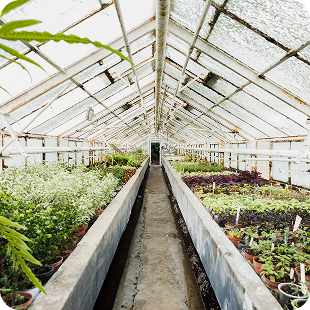
Green shade net
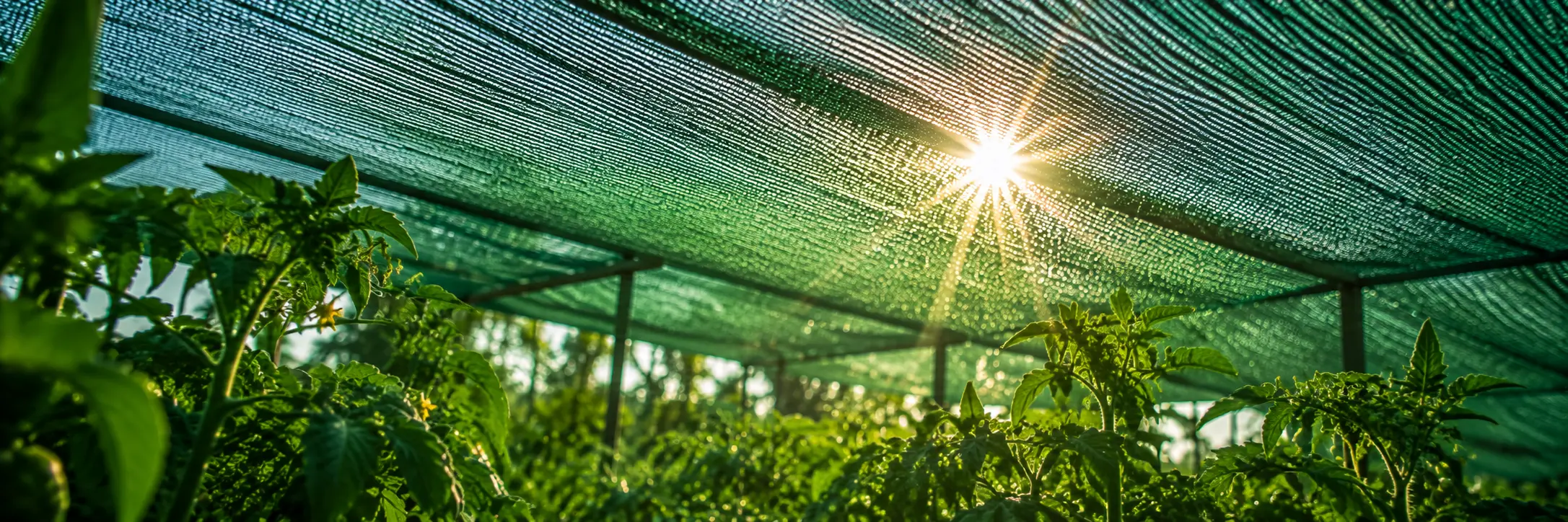
Green net is widely recognised in horticulture and general shading. Its colour changes the spectrum passing through the net. That does not make it automatically better for every crop: plant response depends on crop, season, shade level and microclimate.
What research tells us
Studies of coloured or photo-selective nets show that nets with the same nominal shade can transmit different spectral distributions and produce different crop responses. Results from one crop and climate should not be copied as a universal colour rule.
How to specify colour intelligently
- Choose the required shade factor first.
- Define whether the goal is crop light management, cooling, privacy or visual appearance.
- Compare the same construction and GSM when evaluating colour.
- Test a small area for sensitive crops.
- Account for dust, cleaning, ventilation and installation height.
Ask for a sample and technical data before choosing by appearance alone. Review Sunsafe’s shade-net product range or contact our team to discuss the intended light and heat outcome for your site.
.webp)
.png)


%201.svg)
Leave a Comment