


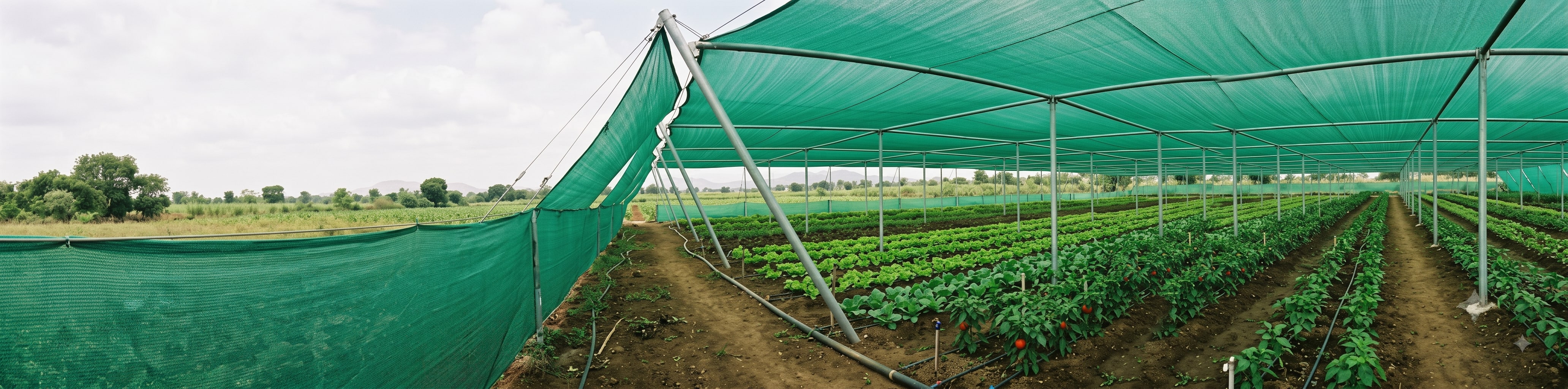
Shade Net for Capsicum: How to Plan Shading for Protected Cultivation
Shade net can help protect capsicum from intense solar load and heat stress, but excessive shade can reduce photosynthesis, flowering and yield. The correct plan depends on location, season, structure, cultivar and production system.
1. Begin with the problem
Record whether the priority is reducing midday radiation, lowering leaf and fruit exposure, limiting sunscald, moderating transplant stress or improving working conditions. Measure outside and inside temperature, relative humidity and light at crop height across several clear and cloudy days.
2. Do not select shade percentage in isolation
Extension guidance notes that shade cloth is sold by the percentage of light blocked and that crop, temperature and season must guide selection. Start conservatively and validate the result locally. A removable or staged system is valuable where monsoon cloud, winter light and summer radiation differ strongly.
3. Ventilation remains essential
Shade reduces radiation but does not replace air exchange. Provide adequate side and roof ventilation, avoid trapping hot air, and maintain enough clearance above the canopy. Manage irrigation using root-zone conditions rather than assuming shaded plants always need the same schedule.
4. Monitor the crop after installation
- Leaf temperature and midday wilting
- Internode length and overly soft growth
- Flower retention and fruit set
- Fruit exposure and sunscald
- Humidity, leaf wetness and disease pressure
- Irrigation demand and drainage
Indian protected-cultivation programmes and field projects include capsicum under net or polyhouse systems, but technical support and correct timing remain critical. Run a small trial where possible and involve a local horticulture specialist. The net is one component of an integrated system that includes cultivar, nutrition, irrigation, pruning, pest exclusion and ventilation.
.webp)
.png)


%201.svg)
Leave a Comment